
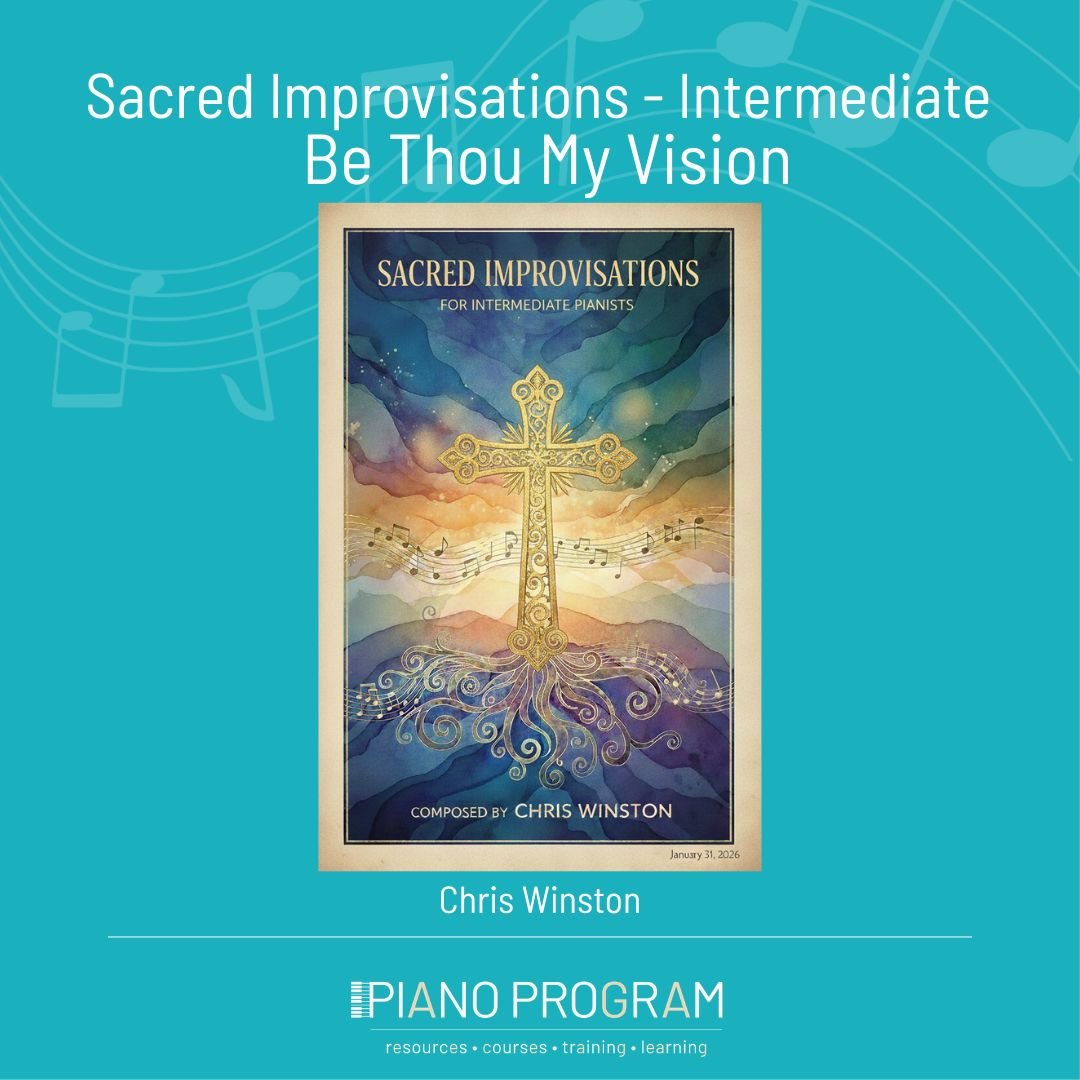
Be Thou My Vision
$5.00
A beautiful solo piano arrangement for the intermediate pianist of the beloved melody “Slane”
Suitable for lessons, recital or a solo during worship.
Full Product Description
Gemini said
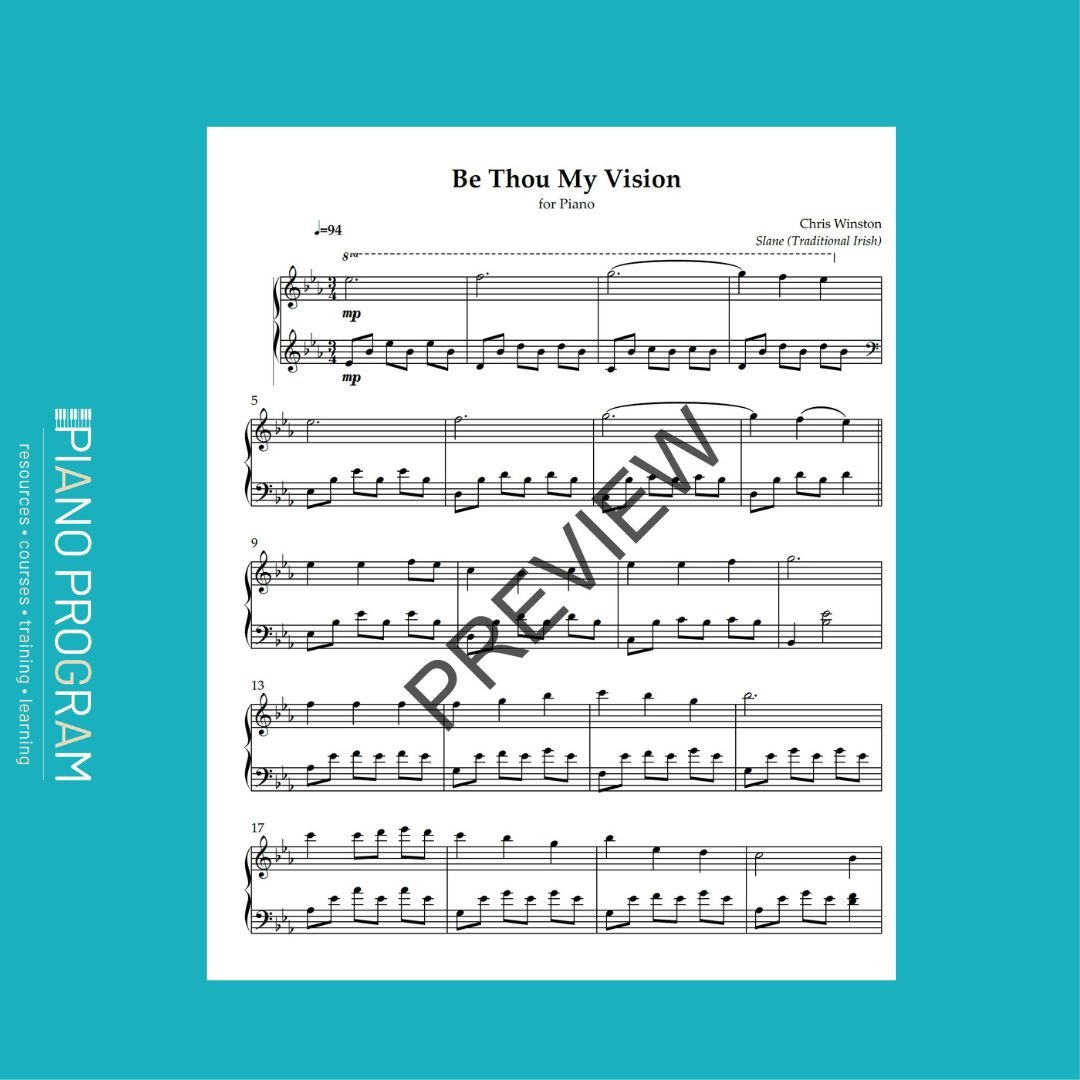
This arrangement of the traditional Irish melody "Slane" ( Major) is designed to help intermediate students master the balance between a flowing, continuous accompaniment and a lyrical, "cantabile" melody.
It serves as an excellent study in textural transparency and physical coordination. Here is a breakdown of the primary pedagogical goals for this piece.
1. Articulation and Touch: The Alberti Bass
The defining technical challenge of this setting is the consistent Alberti bass figure.
-
Balance of Tone: Students must develop a "layered" touch. The accompaniment needs to remain strictly in the background (piano or mezzo-piano), while the melody sings above it.
-
Refining the Thumb: A common pitfall in Alberti patterns is an unintentional accent on the thumb (the highest note of the left-hand figure). Teachers should focus on a light, "ghosted" thumb technique to ensure the pulse remains in the harmony rather than a rhythmic thumping.
2. Melodic Projection (Voicing)
Set against the constant motion of the left hand, the melody of "Be Thou My Vision" requires a deep, connected touch.
-
Horizontal Thinking: Encourage students to hear the long phrases of the Slane tune, ensuring that the repeated notes and leaps are connected emotionally and technically.
-
Weight Distribution: The right hand must carry more "arm weight" than the left to ensure the melody doesn't get lost in the Major textures.
3. Sophisticated Pedaling
Because the Alberti bass spans several intervals within the harmony, pedaling must be precise to avoid "muddying" the sound.
-
Syncopated Pedaling: Students should practice clean, legato pedaling—changing exactly as the new harmony or melodic note is struck.
-
Listening for Clarity: This piece is a great tool for teaching students to "play with their ears," adjusting the depth of the pedal based on the register of the piano to maintain a shimmering but clear resonance.
4. Harmonic Context
Being in the key of Major, the piece provides a warm, resonant palette. Teachers can use this as an opportunity to discuss:
-
Key Awareness: Navigating the three flats while maintaining finger independence.
-
Expressive Transitions: Managing the ebb and flow of the improvisation style, allowing for slight rubato at cadence points without losing the rhythmic integrity of the accompaniment.